A AI capability
A demo is mistaken for a service
Plausible output is not proof of accuracy or operational value.
Test the task in its real workflow.
From AI ambition to dependable operations
AI adoption can stall—or expose the business to data breaches, manipulated decisions and unauthorized actions. Start with the business problem, then examine the complete AI–Data system.
START WITH THE FAILURE PATTERN
A AI capability
Plausible output is not proof of accuracy or operational value.
Test the task in its real workflow.
D + I Data + Integration
Missing records and conflicting definitions turn decisions into rework.
Name the source. Align the meaning.
S + I Assurance + Integration
Failed access rules can leak records. Malicious content can redirect AI. Unchecked tools can cause loss or disruption.
Who can detect, contain, stop and recover?
Failure patterns to investigate—not a diagnosis of every organization. Domain labels show where to look, not the only responsibilities involved.
THE DAIS PHILOSOPHY
Start with one business decision. Assess the whole use case, then agree what must improve.
01 Bound the decision
Name the problem, consequence and next decision.
02 Locate the gap
Use all 21 practices in the same boundary; identify gaps against the target.
03 Act and review
Agree the action and review date. Reassess with appropriate evidence.
No company average. Compare bounded profiles to find shared gaps; never average them into a company score.
No deployment authority. Readiness informs the decision. Named enterprise authorities still decide whether to proceed.
PEOPLE · CAPABILITIES · OPERATIONS · VALUE
Teams own and operate the capabilities. Business modules use them in repeatable workflows. Value must be demonstrated in the resulting service—not assumed from the presence of AI.
Read the relationships, not a maturity sequence. D supplies trusted data; I connects mandatory ontology, interfaces and confirmed effects; A supplies an evaluated, operated service. S applies across all modules: identity, protection, human control, release, evidence and recovery.
The Data team stewards data products. AI/service owners evaluate and operate AI services. The Business team owns the task, decisions and outcome target. The Governance team sets policy and challenges evidence through Assurance controls. These are interacting roles, not a required organization chart or exclusive ownership of a DAIS domain.
Within a selected business module, frame the work, review and decide with AI assistance, then deliver and reconcile the permitted effect. Integration governs both incoming context and action/receipt contracts. Compare service, quality, cost and risk outcomes with the baseline; use outcome and control evidence for governed improvement. Rejected or unsafe work must be held or stopped; the main path does not show every exception.
Assess all 21 practices: five each for D, A and I, and six for S. Report the full profile and limiting conditions for the same bounded use case. Unknown remains unknown; neither the architecture nor a readiness score grants deployment approval or guarantees value. There is no automatic retraining or company-wide average.
FROM THE SYSTEM PICTURE TO ASSESSMENT
R means overall readiness for this use case. It is the lowest of the four domain levels. Strength in one domain does not compensate for a missing condition in another; inspect the full profile, below-target items and blockers.
Owned, fit, traceable, accessible, and recoverable data.
Bounded value, evaluated behaviour, controlled lifecycle, adoption, and service ownership.
Governed interfaces, context, timeliness, actions, effects, and reconciliation.
Identity, protection, human control, release, evidence, incident response, and recovery.
HOW THE RESULT IS CALCULATED
The unit of assessment is one bounded AI-enabled use case. Use the same boundary and reporting period across all domains, and label the assessment depth. Public claims use optional evidence notes; controlled conclusions require the full evidence procedure.
Select the highest cumulative Level 0–4 anchor whose complete conditions are supported. Unknown remains unknown.
D, A, I, and S are each set by the lowest applicable item in that domain.
R is the minimum of the four domain levels. The limiting domain defines the next capability gap.
ONE SHARED MATURITY SCALE
Select a column to see the Data, AI, Integration, and Assurance conditions at that level. These summaries orient the reader; the 21-item survey contains the binding criteria. Files, batch jobs, APIs and agents are design choices, not maturity levels.
READINESS LEVEL 0
All four domains must reach this level for R to reach it. One lower domain keeps R at the lower level.
Data meaning, fitness, provenance, access, or recovery depends on local knowledge.
Intended outcome, behaviour, evaluation, lifecycle, or service ownership is unclear.
People carry context and results; interface, meaning, action, and effect contracts are absent.
Identity, approval, evidence, intervention, and recovery depend on individuals.
READINESS LEVEL 1
All four domains must reach this level for R to reach it. One lower domain keeps R at the lower level.
Required data and a business contact are identified; basic fitness and recovery are described.
Outcome, intended behaviour, basic evaluation, versions, and human role are recorded.
Exchange, context, timing, permitted outputs and result checks have defined owners and basic records.
Named roles, approval, logging, stop, and incident paths exist for the use case.
READINESS LEVEL 2
All four domains must reach this level for R to reach it. One lower domain keeps R at the lower level.
Ownership, meaning, fitness, lineage, access, change, service levels, and recovery are contracted.
Outcome, evaluation, versions, deployment control, workflow roles, cost, and support are governed.
Governed interfaces version meaning, quality, compatibility, timing, errors, and change.
Identity, privacy, human control, release, evidence, and recovery controls are approved and testable.
READINESS LEVEL 3
All four domains must reach this level for R to reach it. One lower domain keeps R at the lower level.
Quality, access, lineage, monitoring, and recovery operate against service expectations.
Evaluated behaviour, controlled releases, workflow adoption, monitoring, and service ownership operate live.
Identity-aware interfaces enforce contracts for context, permissions, actions, errors, and effects.
Teams trace decisions and effects, exercise intervention and recovery, and manage incidents.
READINESS LEVEL 4
All four domains must reach this level for R to reach it. One lower domain keeps R at the lower level.
Observed demand, quality, effects, and incidents improve products, policies, capacity, and recovery.
Outcome and failure evidence improves evaluation, behaviour, workflow, controls, and lifecycle decisions.
Interfaces verify effects, reconcile ambiguity, recover safely, and improve contracts from evidence.
Evidence improves authority, protection, release, observability, recovery, and retirement decisions.
REFERENCE DEFINITIONS
The framework separates capability, evidence, target, gap, and authority without creating another maturity number.
The minimum of D, A, I, and S for one bounded use case.
The common cumulative scale used for every DAIS item and domain.
Public notes are optional respondent declarations, from Not noted to Independently checked. They neither verify nor change a self-reported level.
A target is defined from the use case, risk, obligations, and intended transition—not by automatically adding one to R.
The result identifies the missing item, owner, evidence, and action without averaging it away.
R informs the decision. It never replaces risk, legal, architecture, or release authority.
INTERPRETATION RULES
If a required item cannot be defensibly assessed, its domain and R are Not determined until the missing information is resolved.
A stronger Data or AI level cannot cancel a lower Integration or Assurance level. The minimum preserves the limiting condition.
Public readiness describes claimed capability; controlled attainment requires evidence for the bounded use case. Named enterprise authorities still decide whether to proceed.
DAIS v3.7 design baseline · Experimental. These publication illustrations explain the proposed method and its boundaries; they are not empirical validation results.
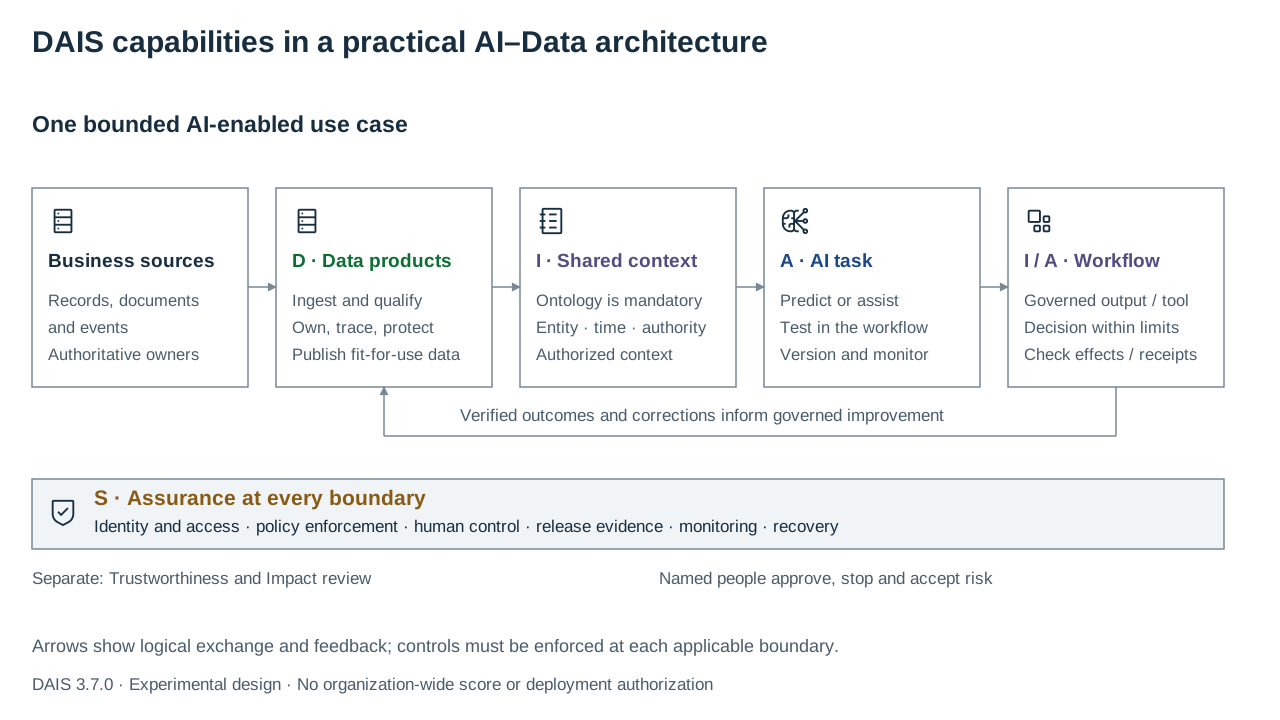
Governed data products, mandatory context and ontology, AI tasks and workflows connect within one use case. Assurance spans every boundary; trustworthiness review and named decision authority remain separate.
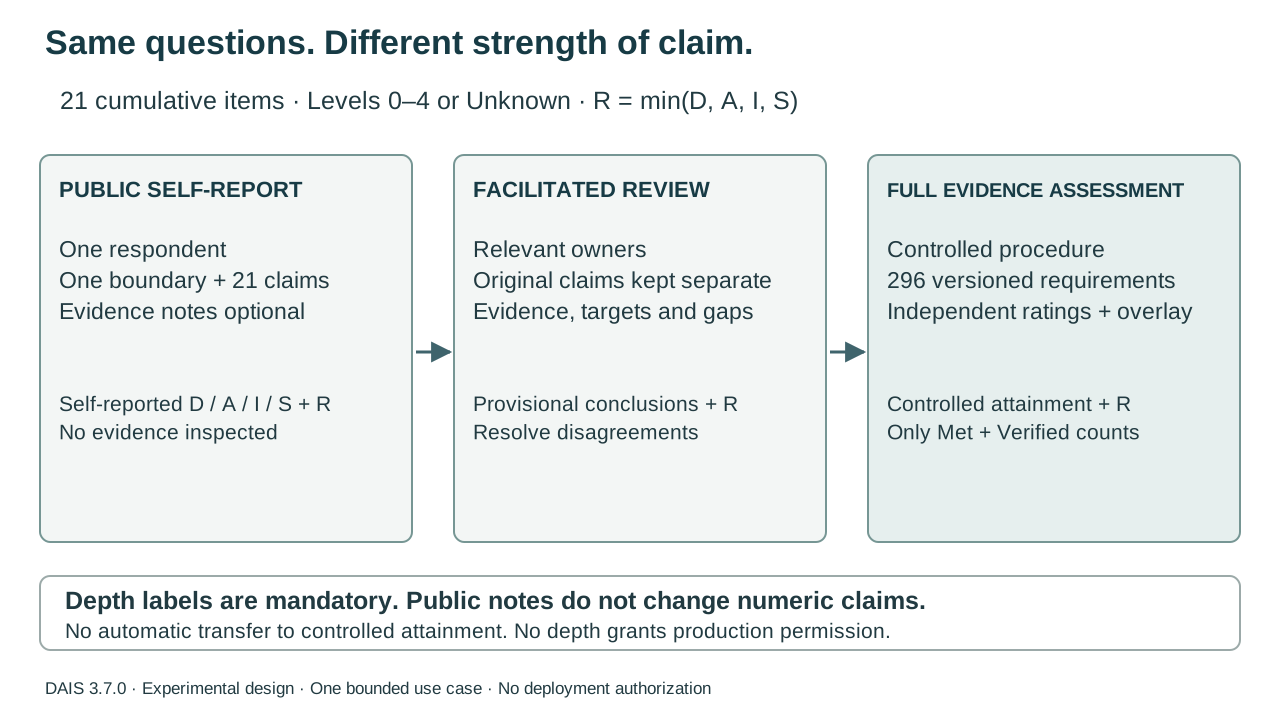
Public, facilitated and full evidence assessments share the 21-item v3.7 scale and minimum rule. Their evidence burden and claim authority differ. Self-report never becomes verification by changing its label.
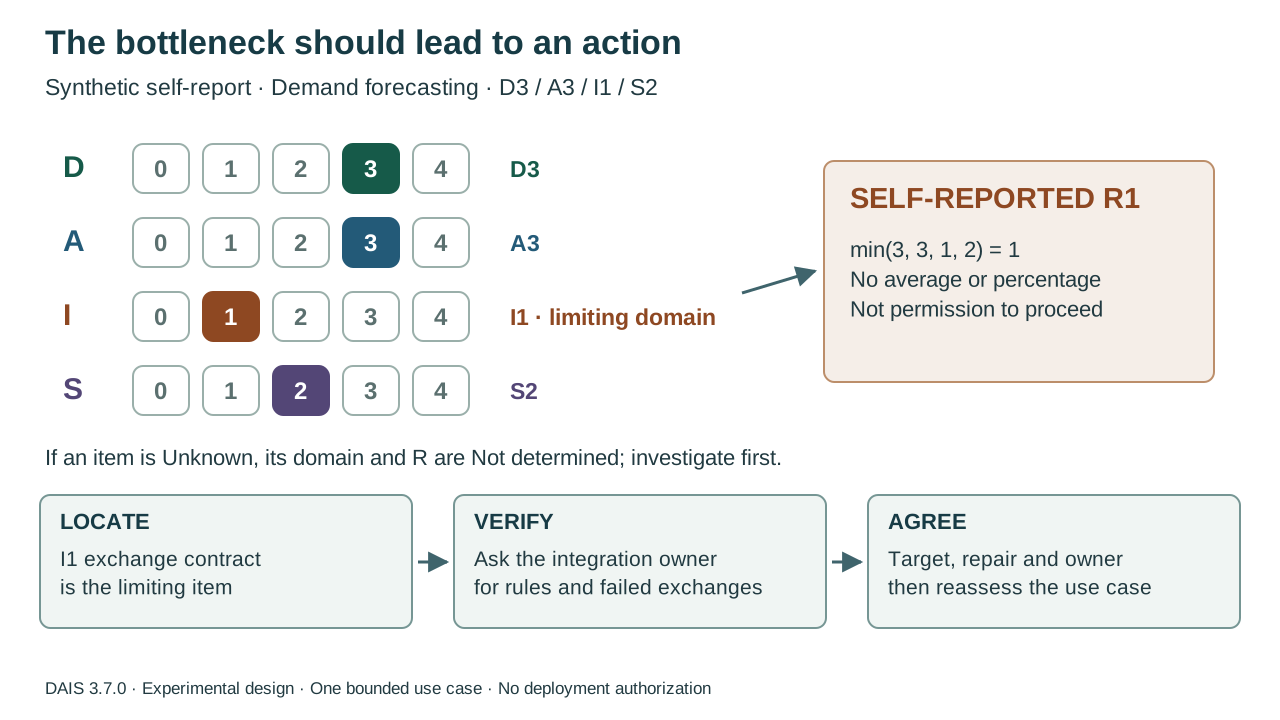
The synthetic D3/A3/I1/S2 profile gives R1. The exchange-contract gap leads to an owner-led evidence check and a separately agreed action. Ordinal levels are not averaged or converted to percentages.
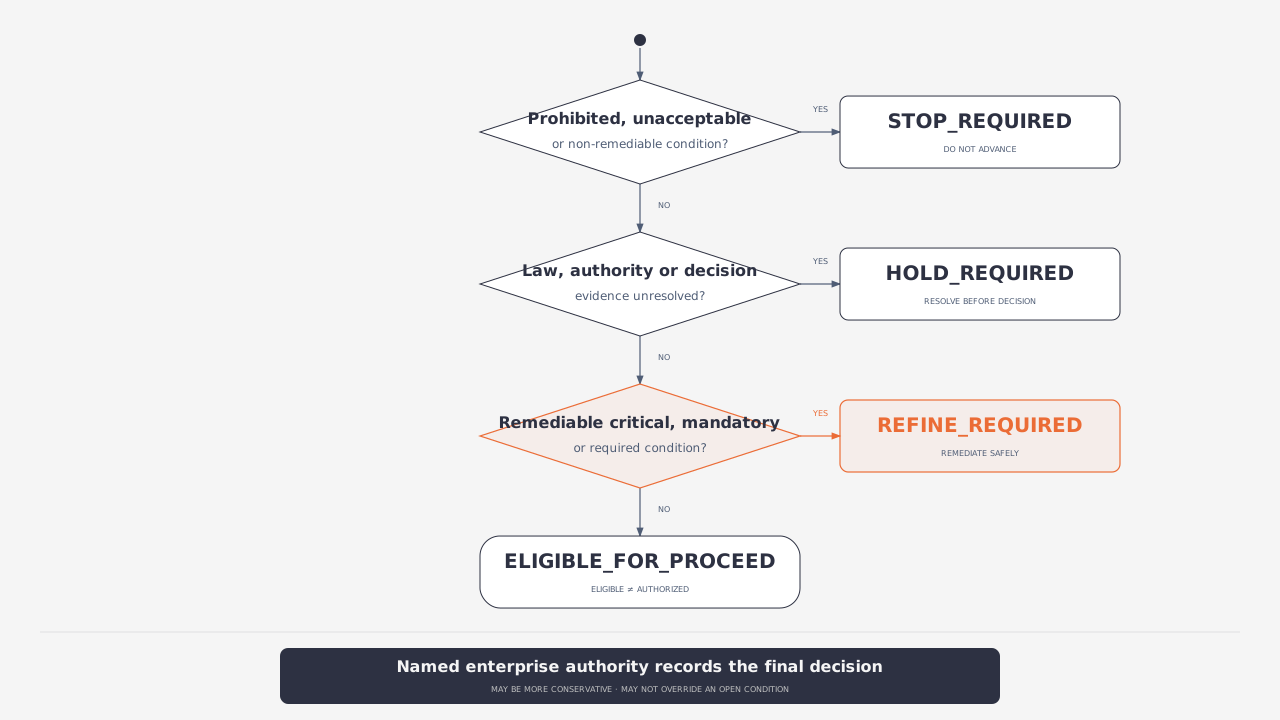
Prohibited conditions lead to Stop, unresolved authority or evidence to Hold, and remediable critical gaps to Refine before Proceed becomes eligible. The named authority makes the actual decision.
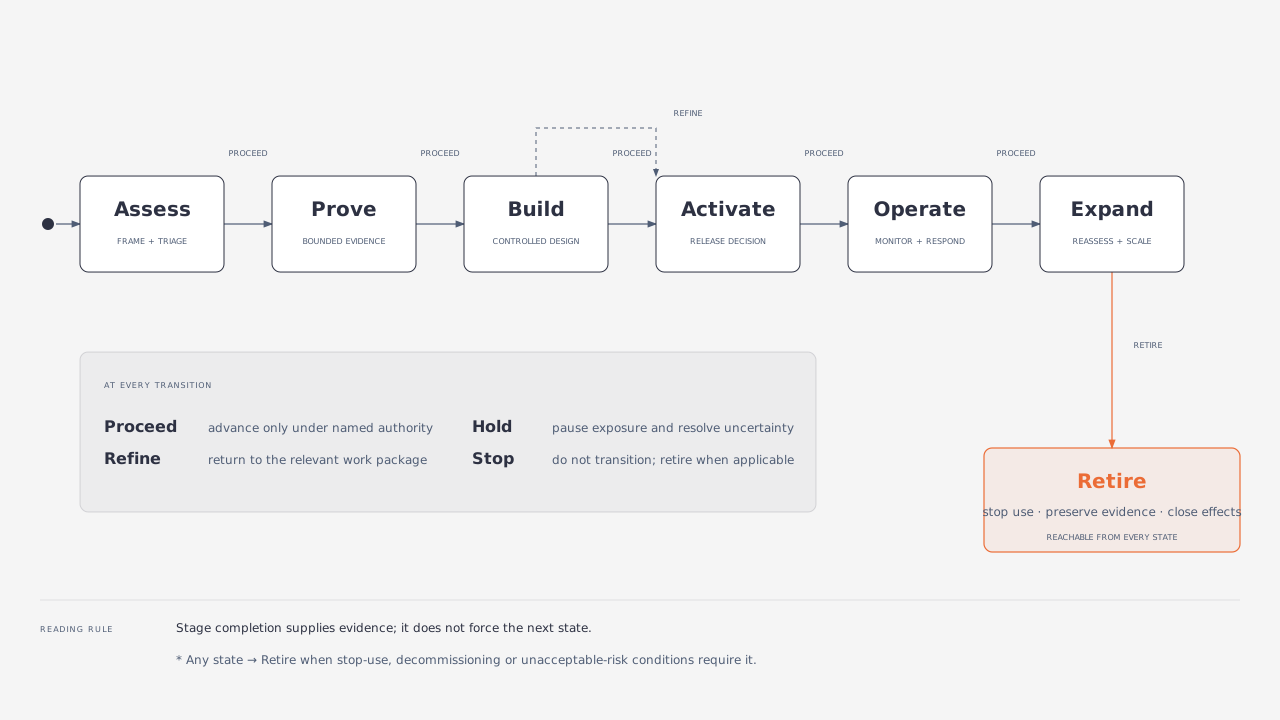
Assess, Prove, Build, Activate, Operate and Expand require explicit stage decisions. Retire can begin from any stage. Evidence supports a transition; it does not authorize exposure automatically.
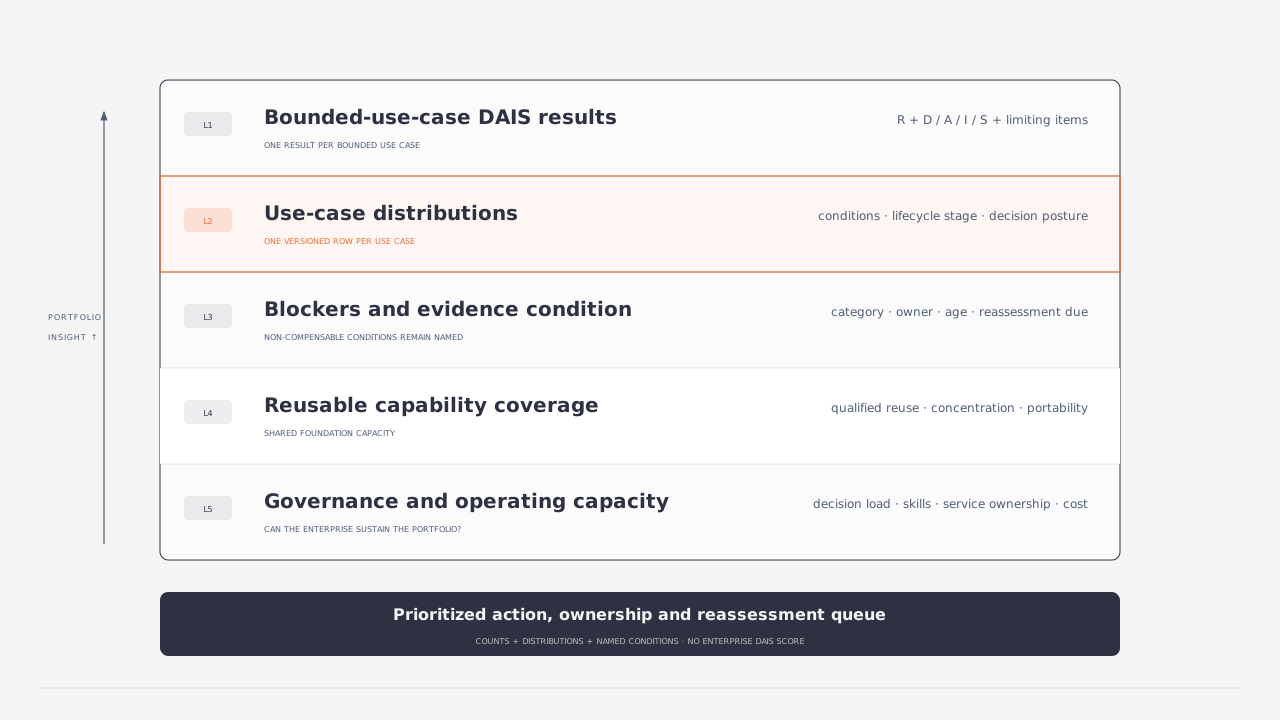
Leadership can inspect use-case distributions, recurring blockers, evidence age, reusable capabilities and operating capacity. Each use case retains its own boundary, version and authority.
Stronger conditions in one view never compensate for a necessary missing condition in another.
Each view asks for observable current conditions without calculating a score on this page.
Examines whether trusted data can be understood, governed, accessed, and recovered.
Evidence themeOwnership, quality, lineage, access, context, recoveryAssess this viewExamines whether an AI-enabled outcome can be evaluated, released, adopted, and operated.
Evidence themeOutcomes, evaluation, release control, adoption, operationsAssess this viewExamines whether systems can exchange shared meaning through controlled interfaces and tools.
Evidence themeInterfaces, shared meaning, freshness, tools, correction loopsAssess this viewExamines whether identity, human authority, traceability, and response controls bound the work.
Evidence themeIdentity, privacy, human control, traceability, incident responseAssess this viewLevel 0 is a classified declaration about current practice. Not sure records uncertainty and leaves the view unclassified.
A selected level declares that level and every earlier level in the same view.
The lowest classified D/A/I/S view limits the overall classified level. Strength in another view does not compensate.
Any Not sure answer keeps that view and the overall result explicitly unclassified. It is never translated to zero.
Data and AI current-condition and declared-impact signals remain unscored. They add context to the guided assessment without changing the D/A/I/S result.
Name one bounded AI-enabled use case, its outcome, workflow, owner and permitted effects.
Choose only the cumulative statements the available evidence can support.
Keep missing conditions and uncertainty visible beside the profile.
Carry the completed result forward as PDF and Markdown.
DAIS is experimental. Its broader method references established standards and public guidance. The public assessment is narrower: 21 self-reported DAIS anchors exposing 296 underlying clauses.
Browse the source rubricThe broader DAIS method references Govern, Map, Measure and Manage outcomes through its separate trustworthiness overlay.
That overlay is not part of the public score and its cross-reference is not yet reviewed. Alignment is not certification.The broader DAIS roadmap references AI management responsibilities and continual improvement for governance and controlled artifacts.
The public assessment does not test conformity to ISO/IEC 42001 or support a certification decision.The broader DAIS strategy and architecture point to security and control obligations where scope, contracts and jurisdiction make them applicable.
DAIS does not determine applicability and does not provide an audit opinion.The broader DAIS strategy and architecture draw on transformation, operating-planning and workload architecture review guidance.
This is not AWS endorsement, readiness evidence or production qualification.A level is reached only when its lower-level declarations hold.
The 21 anchors expose the underlying versioned DAIS clauses.
Completed snapshots preserve method versions and content hashes.
A Not sure answer is never treated as zero or a partial pass.
It is not certification, conformity, a compliance determination, an audit opinion, accreditation, independent verification, an industry benchmark, legal or regulatory advice, a security assessment, or permission to deploy. The method is experimental and has not completed a controlled v3.2 validation pilot. Its rubric import is marked not reviewed; source fidelity is not Method Owner approval.